
Xavier arrives in Kagoshima
The Catholic mission begins through friendship, cultural learning and patient dialogue.
Home / Catholic History
A living faith
Missionaries arrived with humility. Martyrs answered violence with forgiveness. Families kept the faith without priests for generations. The Church emerged, rebuilt, suffered again—and chose hope.
1549—today
Rome teaches universality. The Holy Land draws pilgrims into the earthly life of Christ. Japan offers another gift: perseverance—the quiet courage to remain faithful when buildings, clergy, books and public worship disappear.
“A tourist asks, ‘What can I see?’ A pilgrim asks, ‘What is God showing me?’”— A Pilgrim’s Companion to the Living Faith of Japan
Read the story
Each chapter joins history with a pilgrim reflection, connecting what happened in Japan with the life of faith today.
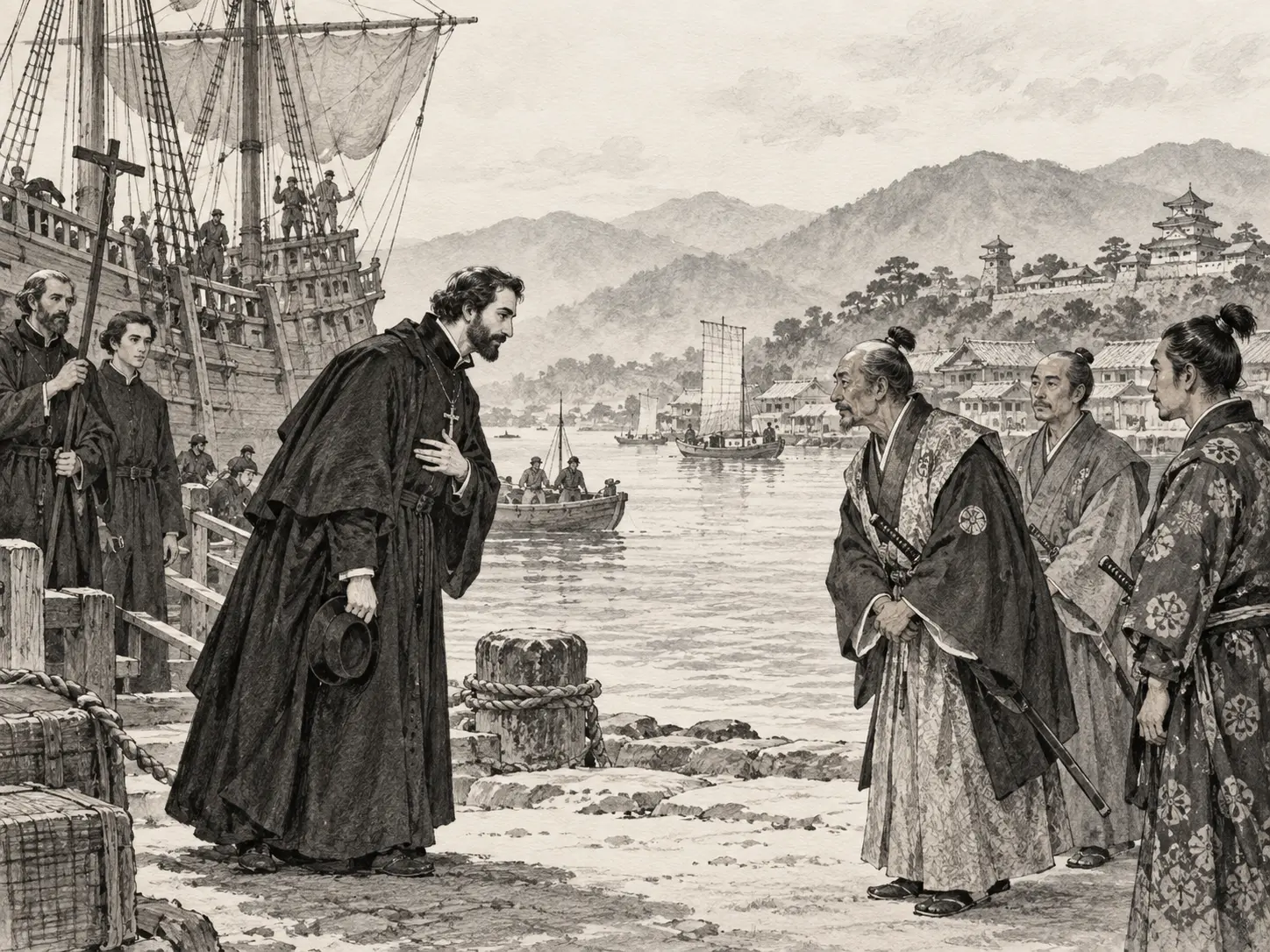 I · 1549–1587
St. Francis Xavier, Japanese collaborators, Christian daimyo, schools and a growing Church shaped by encounter.
Humility & mission →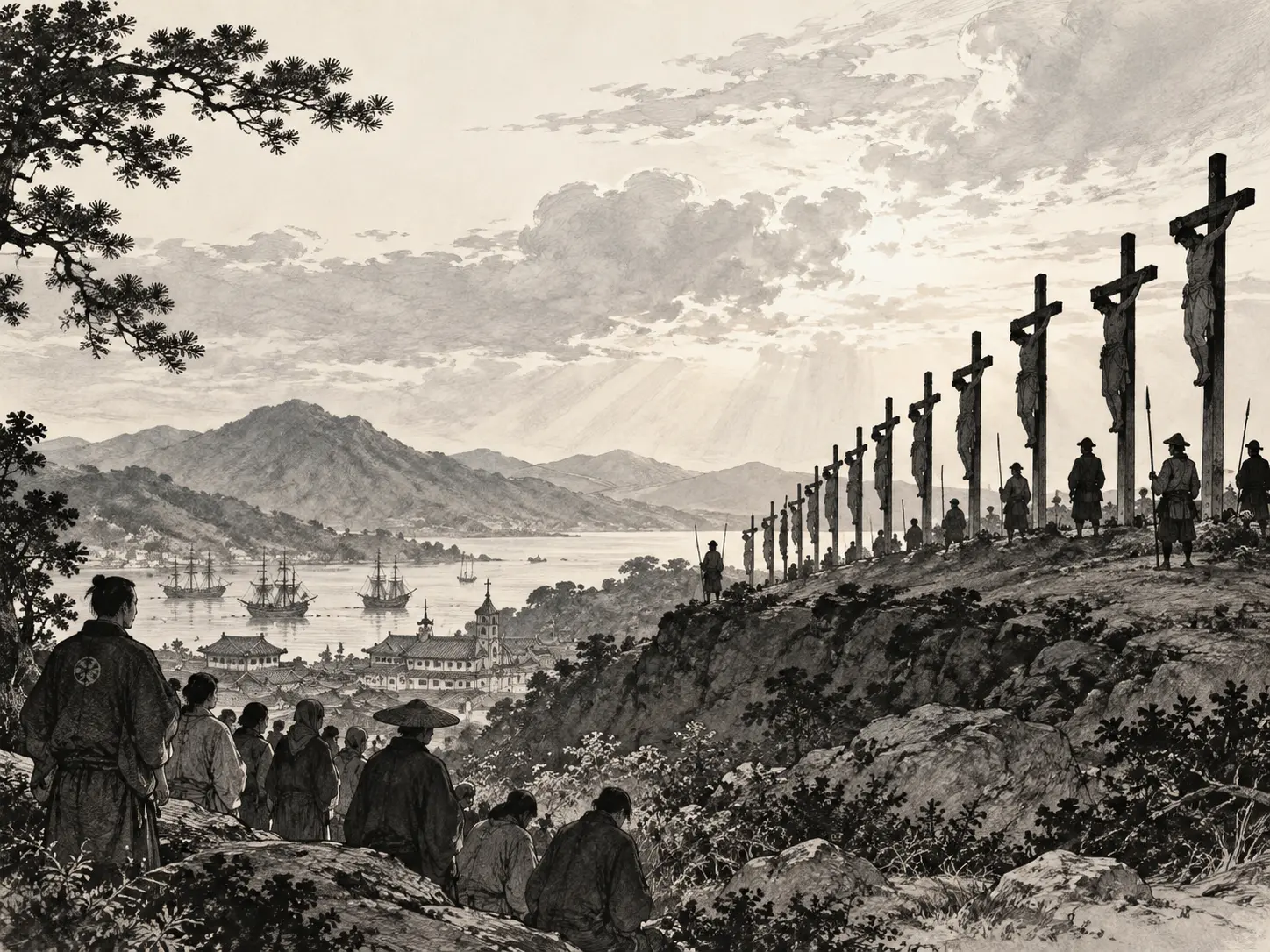 II · 1587–1614
Political fear, the Twenty-Six Martyrs and the beginning of a long season of costly witness.
Courage & forgiveness →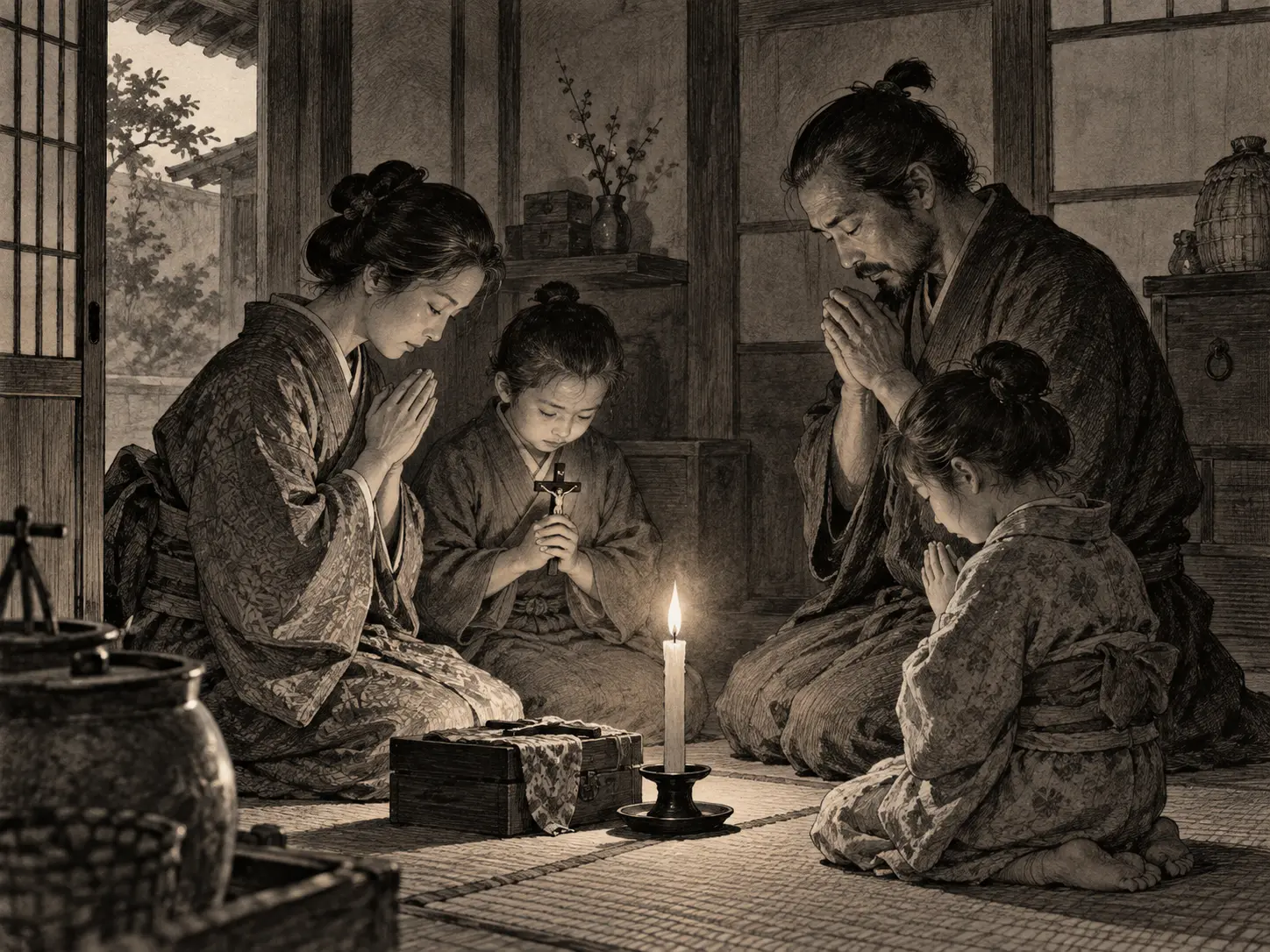 III · 1614–1873
Homes became parishes, memory became a library and hope passed from one generation to the next.
Perseverance & family faith →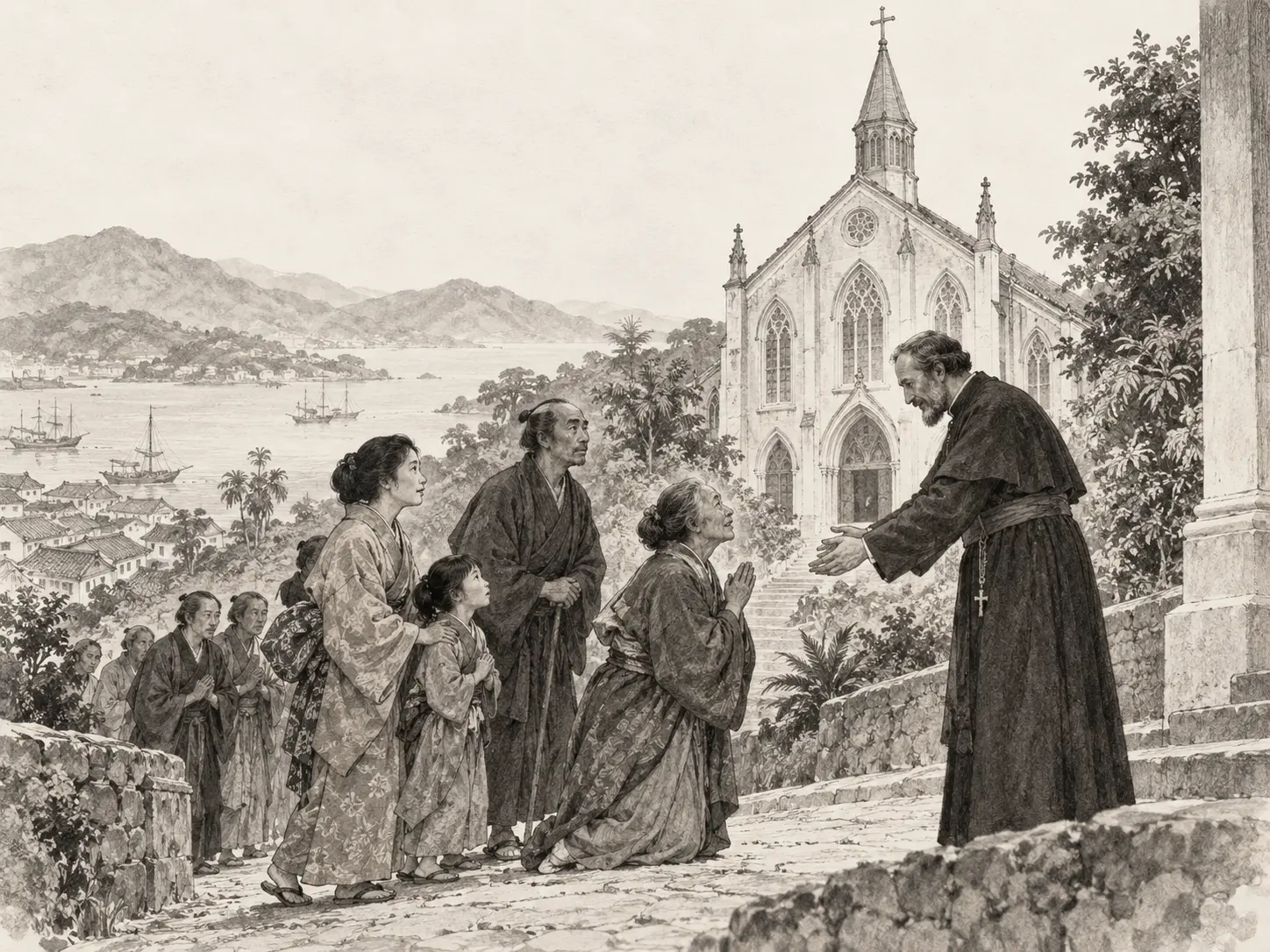 IV · 1865–today
Oura, the restored Church, Kolbe, Urakami, Akita and a pilgrimage that continues after the journey home.
Renewal & peace →Milestones
The dates form a timeline. The people—missionaries, mothers, children, catechists, artisans and parish families—make it a living story.
The Catholic mission begins through friendship, cultural learning and patient dialogue.
Missionaries and Japanese Catholics, including three boys, are crucified above Nagasaki.
Missionaries are expelled and the visible Church is dismantled. Families carry the faith underground.
Hidden Christians reveal themselves to Father Petitjean after more than two centuries without priests.
The anti-Christian notices are removed. Communities emerge, reunite and build churches in thanksgiving.
The atomic bomb devastates Nagasaki’s Catholic heart; the community later rebuilds on the same ground.
Prayer, remembrance and encounter turn sacred places into an invitation to live with courage and hope.
For the pilgrim
At each church, pause for one minute of silence. Ask what the place teaches: Nishizaka—courage; Oura—patient hope; Urakami—forgiveness; Hongochi—self-giving love; Akita—trust.
Explore the sacred places